How Aluminum Casting Enables Rapid Prototyping With Advanced Geometries
Why Prototype Advancement Is Faster With Aluminum Foundry Casting Techniques
Aluminum foundry casting techniques have actually become an essential technique in prototype growth. Their quick production abilities improve the design process, enabling fast iterations and modifications. The light-weight nature of aluminum promotes ingenious designs, while intricate geometries can be accomplished easily. Additionally, minimized preparations and price effectiveness better improve this strategy. The ramifications of these advantages expand beyond plain speed. What aspects add to this accelerated growth?
Understanding Aluminum Foundry Casting
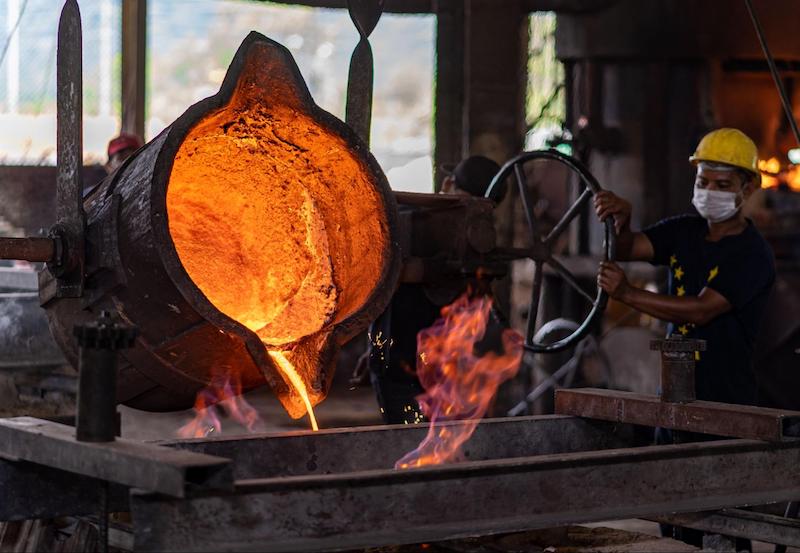
Aluminum foundry casting has been a staple in producing for years, its importance in model growth continues to grow. This process involves pouring molten aluminum right into a mold and mildew to produce parts with elaborate styles and specific dimensions. The adaptability of aluminum enables numerous casting techniques, consisting of sand, pass away, and investment casting, each offering one-of-a-kind benefits tailored to particular job needs.
Comprehending aluminum foundry casting requires knowledge of its buildings, such as lightweight strength, corrosion resistance, and outstanding thermal conductivity. These characteristics make aluminum an optimal choice for prototypes in markets varying from vehicle to aerospace. In addition, the casting procedure can fit complex geometries, which is crucial for evaluating innovative styles. As makers increasingly seek effective and rapid prototyping options, aluminum foundry casting attracts attention as a trusted method that improves the efficiency of item growth cycles while keeping premium quality and efficiency criteria.
Benefits of Quick Prototyping
Quick prototyping supplies numerous benefits that greatly improve the item development procedure. One considerable advantage is the decrease in time from concept to manufacturing. By permitting developers to create concrete versions quickly, teams can determine and attend to issues early, lessening costly modifications later on. Furthermore, fast prototyping motivates cooperation among stakeholders, as physical models facilitate more clear communication and responses. This iterative method promotes development, making it possible for teams to explore numerous style models promptly.
Price effectiveness is another benefit; producing prototypes in smaller sized batches minimizes product waste and reduces overall expenses - Metal Foundry. Quick prototyping speeds up market access, allowing business to respond to consumer demands and patterns much more properly. This rate can supply an one-upmanship, particularly in hectic markets. Generally, fast prototyping improves the advancement procedure, improves collaboration, and decreases costs, making it an invaluable device for contemporary item development
Style Flexibility and Intricacy
Using aluminum foundry casting strategies uses significant design adaptability, enabling designers to produce complicated geometries that would be testing with standard production approaches. This capacity not only improves aesthetic charm however likewise maximizes functionality in model advancement. In addition, the fast model opportunities paid for by these methods enable quick changes to designs, fostering innovation and effectiveness.
Advanced Layout Capabilities

Rapid Iteration Opportunities
Decreased Lead Times and Price Efficiency
In the domain of aluminum foundry casting, the manufacturing process is especially fast, making it possible for manufacturers to bring prototypes to market faster. This expedited timeline not only improves responsiveness to design modifications yet additionally adds to substantial cost savings in product prices. Because of this, firms can attain better cost efficiency while maintaining top notch criteria in model development.
Quick Manufacturing Process
While standard production methods may be obstructed by lengthy lead times, aluminum foundry casting techniques substantially improve the manufacturing procedure. This effectiveness is accomplished via the capacity to develop intricate forms and styles in a solitary action, decreasing the demand for several production stages. The fast turnaround from design to finished model permits firms to increase their item advancement cycles significantly. Additionally, the usage of aluminum reduces the moment invested in machining and completing processes, further enhancing production rate. As an outcome, companies can respond more rapidly to market needs and change designs based upon responses without sustaining substantial delays or prices. Generally, aluminum foundry casting assists in a quicker, much more reliable path to prototype growth.
Reduced Material Prices
Expense efficiency stands as a vital benefit in model development when making use of aluminum foundry casting methods. The intrinsic residential properties of aluminum, integrated with reliable casting methods, bring about significant cost savings in product expenses. Unlike various other steels, aluminum is light-weight and calls for less power to make, making it a cost-effective selection for prototypes. In addition, the ability to produce intricate forms with minimal waste better reduces expenditures - Metal Casting. This effectiveness not only lowers the expense of resources but likewise lowers the economic burden linked with machining and completing procedures. Producers benefit from reduced lead times and enhanced production capability, allowing them to assign sources a lot more properly while maintaining high quality criteria in model growth.
Improved Material Characteristics
As developments in aluminum foundry casting techniques proceed to progress, the resulting product buildings display considerable improvements over typical approaches. Boosted mechanical attributes, such as enhanced toughness and toughness, are important in applications needing reputable efficiency. The refined microstructures created with contemporary casting processes bring about exceptional tensile strength and tiredness resistance, making components more resistant under tension.
Moreover, progressed casting strategies promote the production of lighter parts without jeopardizing architectural integrity. This weight decrease is specifically useful in sectors such as aerospace and automotive, where performance efficiency is essential. In addition, improved corrosion resistance is accomplished via optimized alloy make-ups, guaranteeing durability in numerous environments.
The uniformity of the actors material likewise adds to extra foreseeable performance, which is necessary for model development. Ultimately, these enhanced product properties not just boost the capability of prototypes yet also simplify the shift to final manufacturing, supporting faster and more reliable development cycles.
Case Research Studies in Successful Prototype Development
Effective prototype growth is often exemplified via various situation research studies that highlight the efficient application of aluminum foundry casting methods. One notable case involved an automobile producer aiming to minimize the weight of engine parts. By making use of aluminum casting, they effectively created lightweight prototypes that kept architectural stability, resulting in enhanced gas efficiency in subsequent vehicle versions.
One more study featured a consumer electronic devices firm that needed rapid prototyping for an innovative product. Employing aluminum foundry casting permitted them to swiftly produce functional models, greatly reducing their time-to-market. The precision of casting guaranteed that the models accurately represented the final layout.
Furthermore, a medical tool company leveraged aluminum casting to establish elaborate components for a new surgical tool. This technique facilitated the manufacturing of intricate geometries while guaranteeing biocompatibility. These instance research studies highlight the versatility and effectiveness of aluminum foundry casting in driving effective prototype advancement across diverse industries.
Frequently Asked Concerns
What Kinds of Products Are Ideal Matched for Aluminum Foundry Casting?
Aluminum foundry casting is excellent for producing automobile parts, aerospace components, and consumer electronics housings. Its lightweight nature, exceptional thermal conductivity, and rust resistance make it ideal for a variety of applications across numerous have a peek at this site industries.
How Does Aluminum Casting Compare to 3D Printing for Prototypes?
Aluminum casting generally supplies better sturdiness and surface area finish contrasted to 3D printing, making it appropriate for functional models. Conversely, 3D printing enables for quick models and complicated geometries, enhancing layout flexibility throughout growth.
What Is the Typical Life Expectancy of an Aluminum Prototype?
The regular lifespan of an aluminum prototype can vary significantly, but it typically varies from numerous months to a few years, relying on use problems, environmental aspects, and the particular style and manufacturing procedures employed.
Exist Environmental Interest In Aluminum Casting Processes?
Environmental interest in aluminum casting processes include energy consumption, greenhouse gas discharges, and waste generation. In addition, the mining of bauxite, the primary aluminum ore, elevates concerns associated with environment devastation and water pollution.
How Can I Pick the Right Aluminum Alloy for My Prototype?
To select the best aluminum alloy for a prototype, one must think about mechanical homes, rust resistance, weight, and desired application. Consulting material specs and performing examinations can even more assist the option for suitable efficiency and sturdiness.
Aluminum foundry casting techniques have emerged as an essential method in model development. As suppliers progressively embrace aluminum foundry casting methods, they obtain access to innovative style capabilities that enhance both versatility and intricacy in model advancement. Aluminum foundry casting methods supply substantial possibilities for fast model in prototype growth, enabling designers to refine their principles with impressive rate. Price performance stands as a critical benefit in prototype growth when making use of aluminum foundry casting techniques. Successful prototype advancement is typically exhibited with different instance researches that highlight the reliable application of aluminum foundry casting find out strategies.